

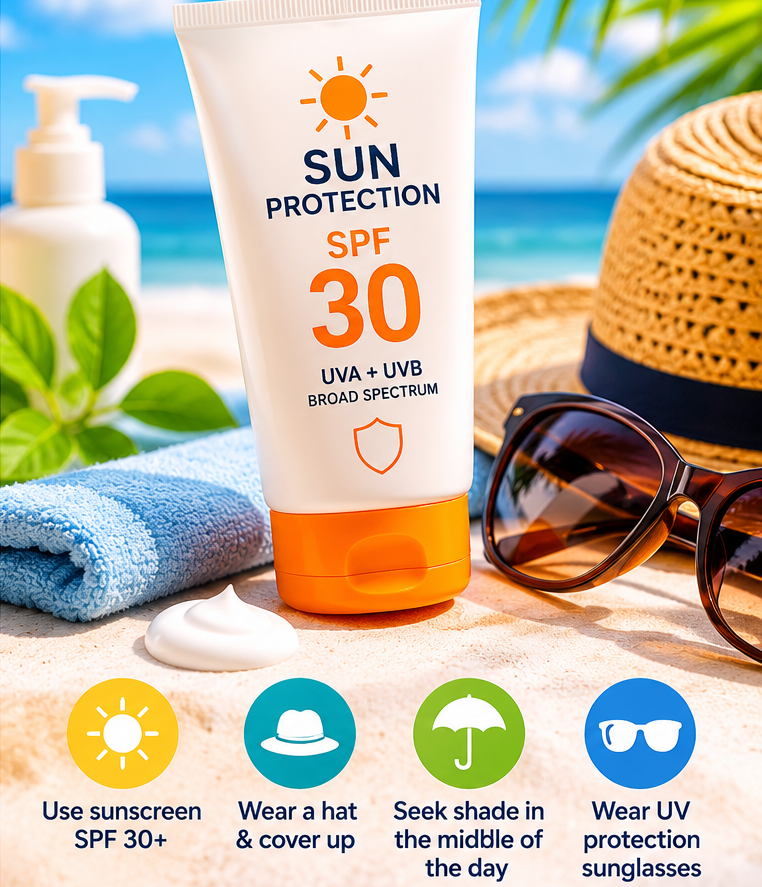
Spending time outdoors can have many benefits, but protecting your skin from ultraviolet (UV) radiation is important throughout the year, especially during the summer months.
Too much exposure to UV rays can cause sunburn and increase the risk of long-term skin damage.
Why Sun Protection Matters
The sun produces ultraviolet radiation that can damage skin cells even on cooler or cloudy days.
Repeated exposure over time can contribute to:
- Premature skin ageing
- Changes in skin pigmentation
- Increased risk of skin cancer
Protecting your skin should form part of your everyday summer routine.
What Sunscreen Should I Use?
The NHS recommends choosing a sunscreen that provides:
- At least SPF 30
- At least 4-star UVA protection
Sunscreen should be applied generously to all exposed skin before going outdoors.
No sunscreen offers complete protection, so it should be used alongside other sun safety measures.
How Often Should Sunscreen Be Applied?
Sunscreen should be reapplied regularly, particularly:
- After swimming
- After sweating
- After towel drying
- According to the manufacturer’s instructions
Even water-resistant products require reapplication.
Other Ways to Protect Yourself from the Sun
Sunscreen works best when combined with additional protection.
Try to:
- Spend time in the shade during the middle of the day
- Wear protective clothing
- Wear a wide-brimmed hat
- Use sunglasses with UV protection
- Take extra care with babies and children
What Is Sunburn?
Sunburn occurs when skin becomes damaged by excessive ultraviolet radiation.
Symptoms can include:
- Red or pink skin
- Warm or hot skin
- Pain or tenderness
- Swelling
- Peeling skin several days later
Symptoms often develop a few hours after exposure and may continue to worsen for up to 48 hours.
How to Treat Mild Sunburn
Most cases of mild sunburn can be managed at home.
Helpful measures include:
- Moving out of direct sunlight
- Drinking plenty of fluids
- Cooling the skin with a cool shower or damp cloth
- Applying aftersun or moisturiser if suitable
- Taking appropriate pain relief if needed and suitable for you
Avoid further sun exposure until the skin has recovered.
When Should You Seek Medical Advice?
Medical advice may be needed if:
- A young child has sunburn
- Sunburn covers a large area
- Severe blistering develops
- Symptoms are accompanied by fever, dizziness or dehydration
- Symptoms are worsening or causing concern
Further information is available from the NHS:
NHS – Sunburn
Common Sunscreen Myths
“I Don’t Need Sunscreen on Cloudy Days”
UV rays can still pass through cloud cover and cause skin damage.
“One Application Lasts All Day”
Sunscreen effectiveness reduces over time and should be reapplied according to product instructions.
“Darker Skin Cannot Burn”
Although natural protection varies, all skin types can experience sun damage.
Key Takeaways
Protecting your skin involves more than simply applying sunscreen. Combining sunscreen with shade, protective clothing and sensible sun exposure habits can help reduce the risk of sunburn and long-term skin damage.
For detailed NHS guidance on sunscreen and sun safety, visit:
NHS – Sunscreen and Sun Safety
Looking for advice on staying safe during high temperatures? Read our guide:
Heatwaves, Hot Weather and Staying Safe This Summer


