

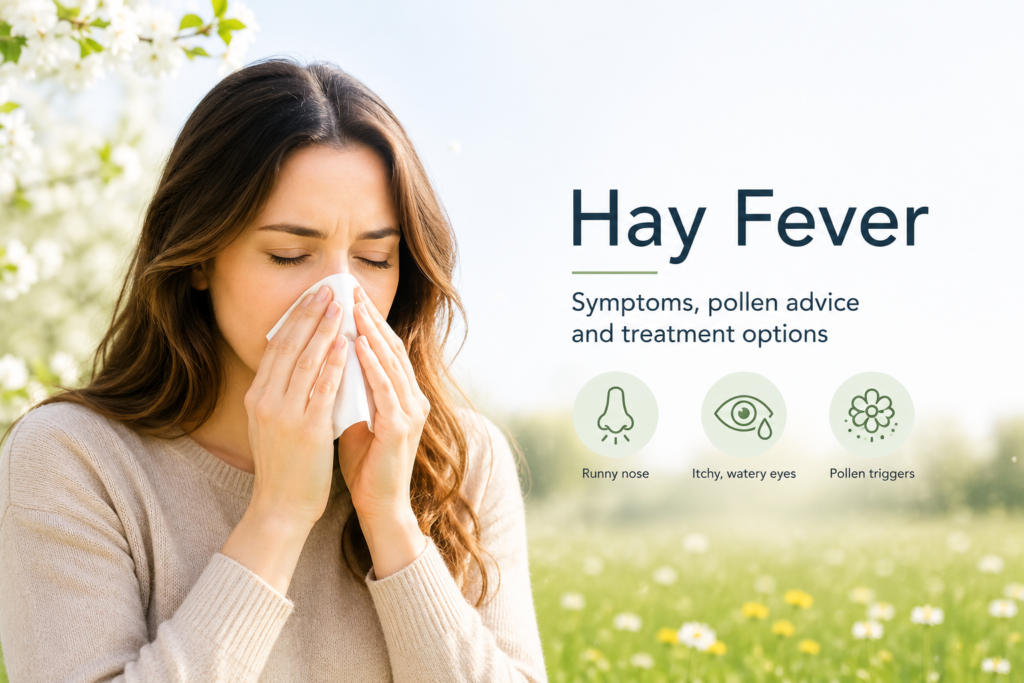
Hay fever is a common allergy caused by pollen. It can lead to sneezing, a runny or blocked nose, itchy or watery eyes, coughing, an itchy throat, headaches and tiredness. There is currently no cure for hay fever, but there are practical steps and medicines that may help ease symptoms.
This guide explains what hay fever is, when symptoms are usually worse, how pollen affects you and when to speak to a pharmacist or GP.
What is Hay Fever?
Hay fever, also called seasonal allergic rhinitis, is an allergic reaction to pollen. Pollen is a fine powder released by plants, trees and grasses. Symptoms can happen when pollen comes into contact with your nose, mouth, throat or eyes.
Hay fever is not the same as a cold. A cold usually improves within 1 to 2 weeks, but hay fever can last for weeks or months while pollen levels remain high.
Common Hay Fever Symptoms
Hay fever symptoms can vary from person to person. Common symptoms include:
- Sneezing and coughing
- A runny or blocked nose
- Itchy, red or watery eyes
- An itchy throat, mouth, nose or ears
- Headache or pain around the forehead
- Feeling tired
- Loss of smell
People with asthma may notice that pollen makes their breathing symptoms worse, including wheezing, coughing, shortness of breath or chest tightness. Pollen is listed by the NHS as a possible asthma trigger.
When is Hay Fever season in the UK?
Hay fever symptoms are often worse between late March and September, especially when the weather is warm, humid and windy. This is when pollen levels are often higher.
What is the Pollen Count?
The pollen count measures the amount of pollen in the air. The Met Office describes it as the amount of pollen per cubic metre observed over 24 hours. A pollen forecast uses this information, along with weather conditions, to estimate the likely pollen risk over the coming days.
Some people get symptoms at lower pollen levels than others, so a “moderate” or “high” pollen count may affect people differently.
Why does the weather affect Hay Fever?
Weather can change how much pollen is released and how far it spreads. Windy and humid days can spread pollen more easily, while rain can help clear pollen from the air for a time. The Met Office also notes that pollen levels can be higher in the early evening on sunny days.
Urban areas may have lower pollen counts than the countryside, but pollen can combine with air pollution and still trigger hay fever symptoms for some people.
How to reduce Hay Fever symptoms
You cannot always avoid pollen, but you can reduce your exposure when the pollen count is high.
The NHS suggests simple steps such as putting petroleum jelly around the nostrils to help trap pollen, wearing wraparound sunglasses, showering and changing clothes after being outside, keeping windows and doors shut where possible, vacuuming regularly and dusting with a damp cloth.
It may also help to avoid cutting grass or walking on grass when symptoms are bad, avoid drying clothes outside, avoid keeping fresh flowers indoors and avoid smoke, as smoking or being around smoke can make symptoms worse. Pets can also carry pollen indoors
Hay Fever treatments from a pharmacy
A pharmacist can give advice and suggest suitable hay fever treatments based on your symptoms, age, health conditions and any medicines you already take. Treatment options may include antihistamine tablets, antihistamine eye drops, antihistamine nasal sprays and steroid nasal sprays where appropriate.
Some antihistamines can make you feel very sleepy. Ask a pharmacist about non-drowsy options, especially if you need to drive, work, study or operate machinery.
Hot Chemist can provide general hay fever advice and help you understand suitable pharmacy options. Any medicine supplied must be appropriate for the person using it, and the pharmacy team may need to ask questions to check suitability.
When should you see a GP?
You should see a GP if your hay fever symptoms are getting worse or if your symptoms do not improve after using medicines from a pharmacy.
Seek medical advice promptly if you have asthma and your symptoms are not improving, you need to use your inhaler more often, or symptoms are stopping you doing usual activities or waking you at night. Call 999 if someone is having an asthma attack and feels worse, does not improve after using their reliever inhaler as advised, or does not have their inhaler.
Frequently asked questions
Is Hay Fever contagious?
No. Hay fever is an allergic reaction to pollen, not an infection, so you cannot pass it on to someone else.
Can Hay Fever be cured?
There is currently no cure for hay fever, but symptoms can often be managed with self-care steps and suitable medicines.
Why is my Hay Fever worse on some days?
Your symptoms may be worse when the pollen count is higher, especially in warm, humid or windy weather. Different types of pollen are released at different times of the year, so symptoms can vary across the season.
Can a pharmacist help with Hay Fever?
Yes. The NHS advises speaking to a pharmacist for hay fever advice. A pharmacist can suggest suitable options such as antihistamines, eye drops or nasal sprays, depending on your symptoms and whether the medicine is suitable for you.


