

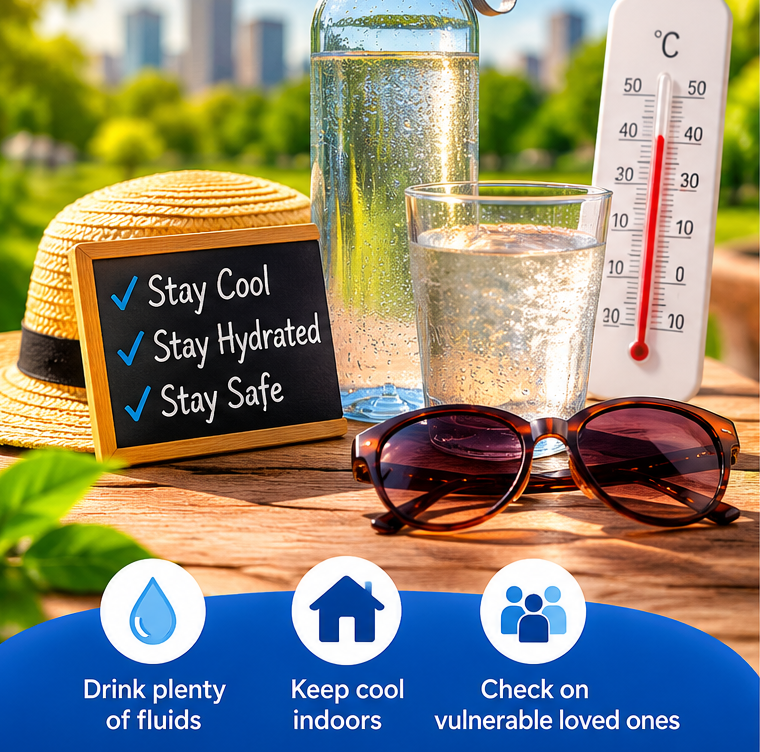
As temperatures rise across the UK, hot weather can affect anyone, but some people are at greater risk of becoming unwell. Babies and young children, older adults, people with long-term health conditions and those taking certain medicines may find it harder to stay cool and hydrated during a heatwave.
Understanding how to stay safe in hot weather can help reduce the risk of dehydration, heat exhaustion and heatstroke.
For the latest government advice and heat alerts, visit the UK Health Security Agency and Government guidance:
UK Heat Health Guidance
What Is a Heatwave?
In the UK, a heatwave occurs when temperatures remain unusually high for several consecutive days. During these periods, the body can struggle to regulate its temperature, increasing the risk of heat-related illness.
Even if temperatures do not feel extreme, prolonged exposure to heat can affect your health, particularly if you are spending time outdoors, exercising, travelling or working in warm environments.
How Hot Weather Affects Your Health
High temperatures can lead to:
- Dehydration
- Heat exhaustion
- Heatstroke
- Sunburn
- Worsening of existing medical conditions
The risk increases when hot weather is combined with physical activity, alcohol consumption or inadequate fluid intake.
How to Stay Cool During Hot Weather
Simple measures can help reduce your risk of becoming unwell:
Keep Your Home Cool
Close curtains or blinds in rooms exposed to direct sunlight.
Open windows when the outside temperature becomes cooler, particularly during the evening and overnight where it is safe to do so.
Use fans where appropriate and move to cooler parts of your home if necessary.
Stay Out of Direct Sunlight
Try to avoid spending long periods outdoors during the hottest part of the day, typically between 11am and 3pm.
If you do go outside:
- Seek shade where possible
- Wear loose-fitting clothing
- Wear a wide-brimmed hat
- Protect your skin with sunscreen
You can read more about sun protection in our article:
Sunscreen, Sun Safety and Sunburn: What You Need to Know
Drink Plenty of Fluids
One of the most effective ways to stay safe during hot weather is to remain hydrated.
Water, lower-fat milk and sugar-free drinks can help replace fluids lost through sweating.
It is generally advisable to drink regularly throughout the day rather than waiting until you feel thirsty.
Signs of Dehydration
Dehydration occurs when your body loses more fluid than it takes in.
Common signs include:
- Feeling thirsty
- Dry mouth
- Dark yellow urine
- Passing urine less often than usual
- Feeling tired or dizzy
- Headaches
Young children and older adults can become dehydrated more quickly and may require closer monitoring.
For more information about dehydration symptoms and treatment, visit the NHS:
NHS – Dehydration
What Is Heat Exhaustion?
Heat exhaustion is caused by the body becoming too hot.
Symptoms may include:
- Excessive sweating
- Feeling faint or dizzy
- Headaches
- Nausea
- Muscle cramps
- Fast breathing or heartbeat
- Weakness and tiredness
Heat exhaustion is not usually serious if recognised and treated quickly.
What To Do If Someone Has Heat Exhaustion
Move to a cool place and encourage them to rest.
Provide cool water or an oral rehydration solution if appropriate.
Loosen unnecessary clothing and cool the skin using damp cloths, cool water or a fan.
Most people begin to improve within 30 minutes.
Heatstroke Is a Medical Emergency
Heatstroke occurs when the body can no longer control its temperature and requires urgent medical attention.
Call 999 immediately if someone:
- Remains unwell after cooling measures
- Becomes confused
- Loses consciousness
- Has a seizure
- Is not sweating despite feeling very hot
Find detailed NHS guidance here:
NHS – Heat Exhaustion and Heatstroke
Who Is Most at Risk?
Extra care should be taken for:
- Babies and young children
- Adults aged 65 years and over
- People with heart, kidney or respiratory conditions
- People living alone
- Individuals taking medicines that may affect hydration or temperature regulation
If you are concerned about how hot weather may affect your medicines or health condition, seek advice from a healthcare professional.
Key Takeaways
Hot weather can increase the risk of dehydration, heat exhaustion and heatstroke. Staying hydrated, keeping cool, avoiding excessive sun exposure and recognising early warning signs can help protect your health throughout the summer.
For comprehensive NHS advice on coping with hot weather, visit:
NHS – How to Cope in Hot Weather
Interested in protecting your skin this summer? Read our guide:
Sunscreen, Sun Safety and Sunburn: What You Need to Know


