

Meningitis B: what you need to know
Meningitis B is a serious bacterial infection that can cause swelling of the lining around the brain and spinal cord (meningitis) and blood poisoning (septicaemia). It can affect people of any age, but babies, young children and teenagers are most at risk. Cases are rare, but they can become severe quickly, so it is important to know the symptoms and act fast.
Recent updates from the UK Health Security Agency (UKHSA) have highlighted a rise in meningitis B cases in some groups. While the overall risk to the general public remains low, awareness is key to keeping yourself and your family safe.
Symptoms to look out for
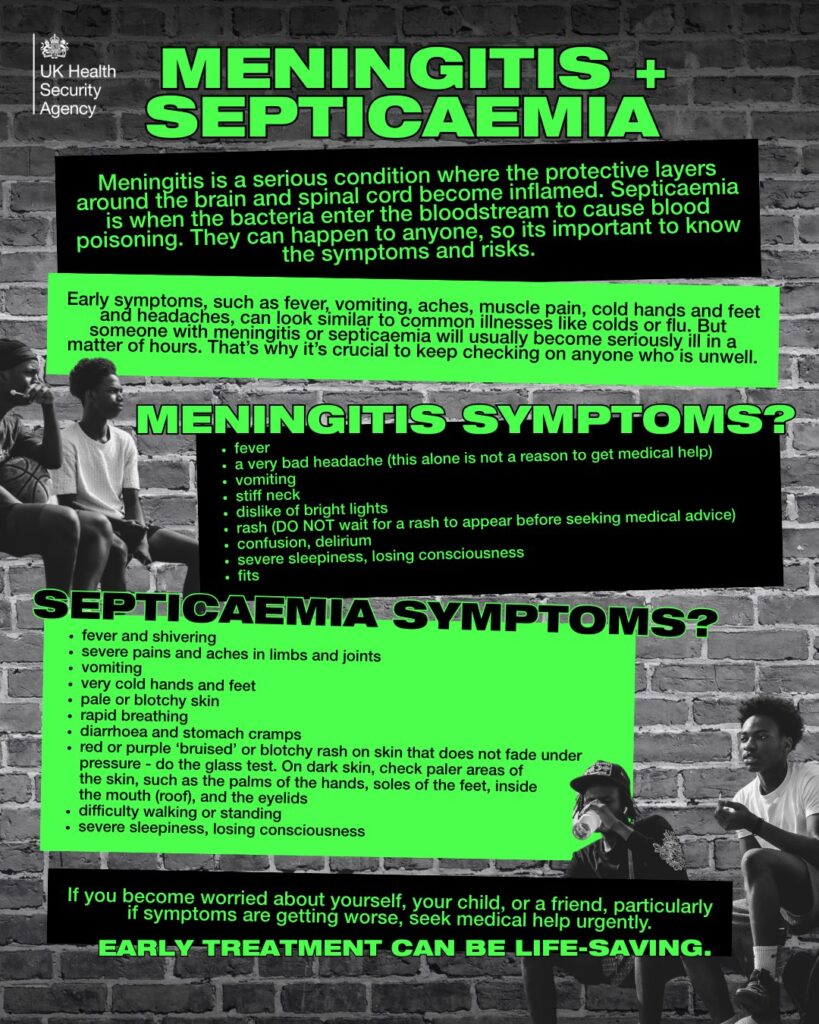
Meningitis and septicaemia can start with symptoms similar to flu, which can make them difficult to recognise early on. Symptoms can include:
- a high temperature
- cold hands and feet, limb pain or pale skin
- vomiting
- severe headache
- a stiff neck
- sensitivity to light
- drowsiness or difficulty waking
- confusion
- seizures (fits)
A rash that does not fade when you press it can appear later, but not everyone develops a rash. Do not wait for a rash to appear.
When to seek urgent help
Meningitis can become life-threatening very quickly. You should seek urgent medical help if you are worried about symptoms getting worse or not improving.
Call 999 or go to A&E immediately if someone:
- is difficult to wake, confused or unresponsive
- has a seizure
- has a rash that does not fade under pressure
- has severe limb pain, pale or mottled skin, or feels very cold
For urgent advice, you can also contact NHS 111.
How meningitis B spreads
Meningitis B bacteria are spread through close contact, such as coughing, sneezing or kissing. Many people carry the bacteria in their nose and throat without becoming ill, but it can sometimes cause serious infection.
Vaccination and protection
The MenB vaccine is part of the routine NHS childhood vaccination programme and helps protect babies against meningitis B. It is important to attend all scheduled vaccinations when invited.
Teenagers and young adults should also be aware of the symptoms, especially those living in close settings such as university accommodation.
More information
For the latest updates and detailed guidance, you can read the full UKHSA blog here: https://ukhsa.blog.gov.uk/2026/03/18/meningitis-b-outbreak-what-you-need-to-know/
Important note
This information is for general awareness only and is not a substitute for professional medical advice. If you are concerned about symptoms, seek medical help promptly.


